 AU
AU  NZ
NZ 
March 29, 2026
Cleaning Chemistry for Bed Pan Washer Disinfectors: What Should You Use and Why?
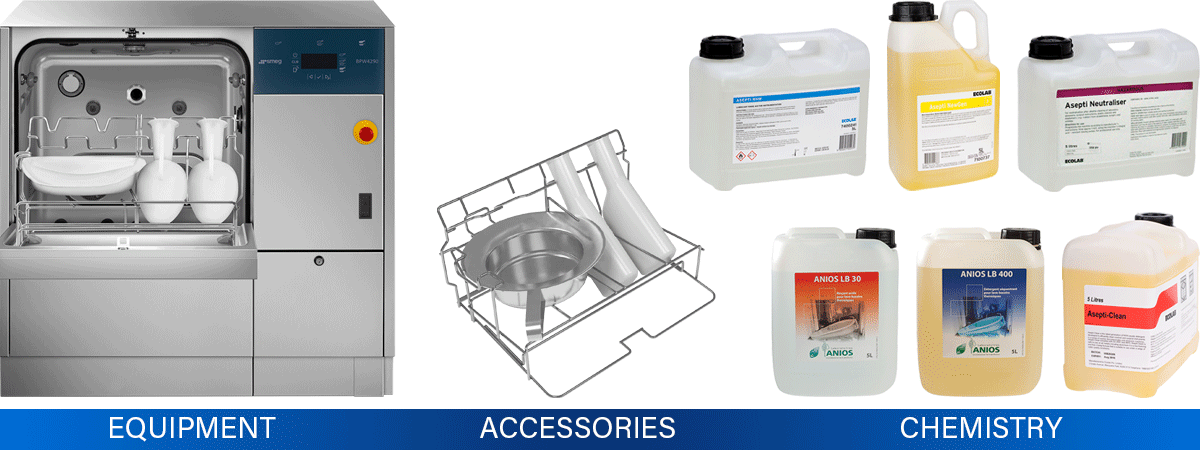
While thermal disinfection does the heavy lifting in a bed pan washer disinfector (BPWD), chemistry still plays a crucial supporting role. Using the right detergent protects your equipment, ensures consistent cleaning performance, and helps prevent the long‑term build‑up of soil and scale inside both the machine and reusable receptacles.
Here’s what healthcare facilities need to know.
Why Chemistry Matters in BPWDs
Bed pans and urinals are high‑soil items. Even though BPWDs rely on heat for microbial kill, detergent is critical because:
- Faecal matter contains fats, proteins, and organic debris that require surfactants to break down
- Dried‑on deposits are harder to remove with thermal action alone
- Water quality varies, and chemistry helps counter mineral, hardness, and residue issues
- Proper chemistry prevents long‑term machine damage (e.g., scaling, sensor fouling, blocked spray nozzles)
In short, thermal disinfection sanitises – but chemistry cleans, and you need both to achieve a compliant outcome.
What Type of Chemistry Should Be Used?
Low‑Foaming Alkaline Detergents
These are the most commonly recommended detergents for BPWDs.
Why they’re used:
- Effectively break down faecal soil, fat, and bodily fluid residues
- Lift organic deposits without causing excessive suds
- Protect machine components by preventing soil build‑up
- Support consistent spray pressure and rinsing
Alkalinity helps solubilise organic matter – essential for bed pan cleaning, where soil loads are high.
Detergents Formulated Specifically for Bed Pan Washers
Some manufacturers supply dedicated detergents tailored for:
- Correct pH range
- Compatibility with stainless steel and plastics
- Reduced foaming
- Rinseability
- Residue control
These formulations ensure stable performance, even in facilities with challenging water conditions.
Water Softening or Descaling Additives
Depending on the region, hard water can be a major issue. Mineral deposits cause:
- Scale inside the chamber
- Blocked nozzles
- Reduced spray pressure
- Longer cycle times
- Increased maintenance issues
Using detergents with built‑in water‑softening agents helps prevent this. Some facilities also use routine machine descalers during scheduled maintenance.
What Chemistry Should NOT Be Used in BPWDs
❌ Manual cleaning products (e.g., hospital-grade disinfectant wipes or sprays)
These are not designed for thermal equipment and can cause residue build-up or machine corrosion.
❌ Chlorine‑based products (bleach)
- Corrosive to stainless steel
- Degrades seals and components
- Produces dangerous fumes in enclosed spaces when heated
Many BPWD manufacturers explicitly warn against chlorine use.
❌ Enzymatic detergents designed for instrument washers
These formulas are designed for lower temperatures and different soil types and are unnecessary for pan room items.
❌ Highly foaming detergents
Foam interferes with spray pressure, impairs rinsing, and can trigger machine alarms.
How Much Chemistry Should Be Used?
Detergent dosing should be:
- Automated wherever possible (via dosing pump)
- Calibrated according to manufacturer instructions
- Adjusted based on water hardness and soiling levels
- Verified during routine validation or commissioning
Overdosing wastes money and increases residue.
Underdosing reduces cleaning performance and increases the risk of contamination.
The Impact of Chemistry on Machine Lifespan
The right detergent:
- Protects sensors and heating elements
- Minimises internal scaling
- Preserves seals and gaskets
- Reduces need for premature part replacement
- Supports reliable thermal performance
Poor chemistry choices significantly increase maintenance costs and machine downtime.
Best Practice Tips for Chemistry in BPWDs
- Use manufacturer‑approved, low‑foaming alkaline detergents
- Have dosing checked at least annually (or during AS 5369:2023 validation)
- Monitor for chemical residue on bed pans – a sign of incorrect rinsing or dosing
- Review water hardness annually to determine if softening support is needed
- Train staff to recognise signs of detergent depletion, such as poor cleaning results
Using the right chemistry in a bed pan washer disinfector isn’t just a technical detail – it’s essential for ensuring clean, safe reusable receptacles, protecting your equipment investment, and delivering a pan room workflow that meets modern infection prevention expectations.
Please note:
The above information is ‘general information’ only; follow facility engineering, IPC policy, and manufacturer instructions always.

